


There is a padlock on the door. A bill on the doormat.
On the corner of King Street and Lowther Street, in the west Cumbrian town of Whitehaven, is the carcass of a High Street giant.
Etched into the cream coloured stone work above the first floor windows are the words: Montague Burton, the Tailor of Taste.
At knee height, at street level, a gold coloured inscription: "This stone laid by Arnold James Burton, 1938."
Stitched into the corporate history of Burton's, the menswear shop, was a tradition to lay these stones; this one a reference to Montague's youngest son.
Whitehaven is far from unique in wearing the bruises of the pandemic and the migration of shopping online.
But something else is happening here. People are leaving too.
I meet the directly elected Mayor of Copeland, Conservative Mike Starkie, by the main run of shops on King Street.
He is candid. He has to stop the exodus - by providing people, particularly young people, with reasons to stay. He is a man of energy; enthusing about his vision for Whitehaven's future.
But the name I keep seeing, as we wander along, is Peill and Co: an estate agents specialising in commercial property. To Let signs are everywhere.
Burtons is one of many, many casualties here.
'Horrible shops'
"There are no prospects for kids here these days. I've got a lot of family members who went to university and never came home. And that is a real shame," one woman having lunch outside Café West tells me.
"It's horrible. You see the change. Look at all the horrible shops. Empty," her friend adds.
These are not the authors of casual, thoughtless criticism, but the candid assessments of proud west Cumbrians whose pride has been dented by reality.
"It's dead. Absolutely dead. I saw it when it was in its heyday. It was awesome. Now it's a ghost town."
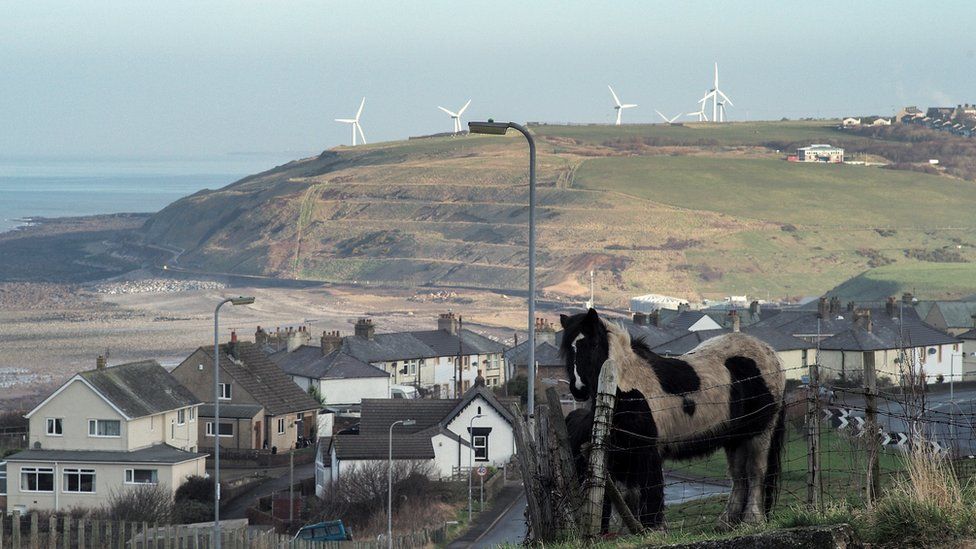
Enter, then, the plan for a new coal mine here, offering hundreds of well-paid local jobs and posing even more questions for the government.
Yes, it is awkward because the UK is hosting the COP26 climate summit in Glasgow in November. But it would be awkward anyway.
Steel industry
The application for a new coal mine here, extracting coking, or metallurgical coal for the steel industry, is a case study in the politics of climate change; a collision between the long term commitment to net zero carbon emissions by 2050 and fiendishly difficult questions about how to get there.
Does the UK want a steel industry, seen as a strategic asset, but one that is still reliant on coking coal?
The government says yes, and the coal is imported. So wouldn't it be better to dig it out of the ground here?
Yes, argue the mining company. No argue critics, that would increase the supply of coking coal, push down the price, and reduce the incentives to find alternative ways of making steel.
In September, the Planning Inspectorate will look into the case for Woodhouse Colliery, as the proposed new mine is called.


0 Comments