


Colin Heal's house is prepared for an uncertain future.
The three-storey house in the Hertfordshire village of Wheathampstead has 35 solar panels that produce more energy than Mr Heal and his wife can use, so they can sell surplus electricity.
The house is fully electric. The couple plan to buy solar battery storage so that even more of their energy is useable.
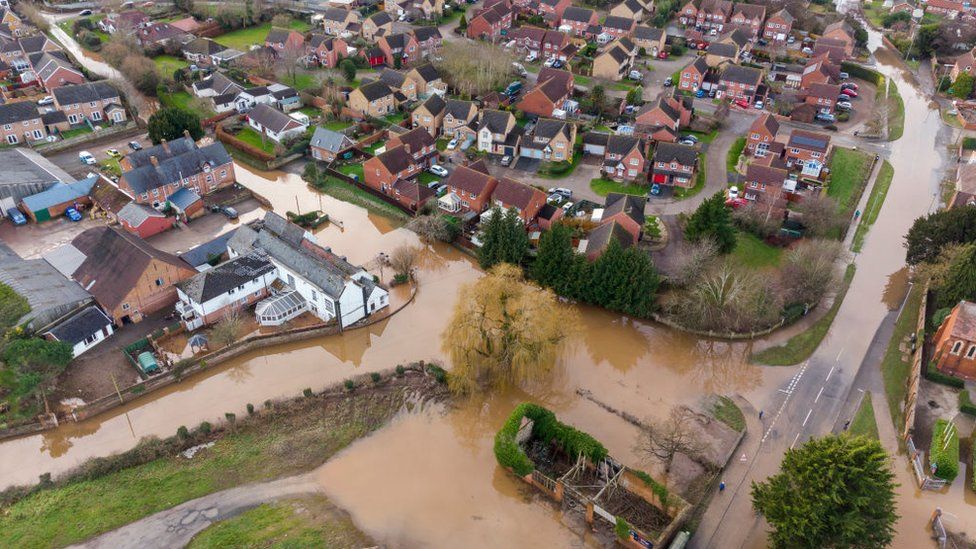
While flooding is a concern in the surrounding area, they don't worry about it - and not just because their house is on an elevation.
Their driveway has gravel that drains water, rather than collecting it into pools, and their green roof reduces rainwater run-off. And under their rear garden is a soakaway: essentially a big tank constructed of crates that collects excess rainwater and gradually drains it into the subsoil.
Also, below the surface, are pipes connected to a ground source heat pump. The pump takes heat from the ground and boosts it to the level needed for the underfloor heating and hot water. Heat pumps are much more energy efficient than boilers, which typically rely on fossil fuels.
Mr Heal's house does have a wood-burning stove as well, for those days when the temperature dips below freezing and the heat pump becomes less efficient. But the stove is there mainly because it looks nice, not because it is their main source of heat.
Higher energy needs, more flood risk and variable temperatures: these are among the impacts of climate change for which all of the UK - not only sustainable construction consultants like Mr Heal - needs to be ready.
Yet the UK is ill-prepared, the Climate Change Committee (CCC) has concluded. The CCC, which advises the government on climate change, has issued a stark warning in its latest independent assessment of UK climate risk: the risk is intensifying, but adaptation action has fallen behind.
While there's been some focus on climate mitigation or limiting greenhouse gas emissions, experts say there's an equally pressing need for us to adapt to a world with more climatic extremes.
One key change will be higher temperatures. The CCC warns that a quarter of UK homes are in danger of overheating. People in the UK have tended to focus on making buildings warm, but increasingly more awareness will be needed of how to keep them cool.


0 Comments